
Private, on-premise AI for SMBs

AI your business owns — not AI you rent.

CPUnity deploys powerful open AI models on your own hardware, inside your own network. Your team gets AI on every desk — 24/7, zero per-token bills, and data that never leaves the building.

30 minutes, no slides, no jargon — a straight answer on cost, scope and privacy.

Abstract render of a private AI core: a glowing cyan ring of circuit arcs around a central node on a deep navy panel
Local & PrivateRuns on your network. Your data stays home.
Zero Token CostsRuns all day at $0 marginal cost. No per-seat creep.
Vendor-NeutralNo commissions, no reselling. We advise; you own.
Security-HardenedBuilt by engineers who clean up real breaches.

What we do

Three ways we bring AI in-house

Everything we sell has the same shape: you own the capability when we leave. Hardware you chose, models you chose, skills your staff already use.

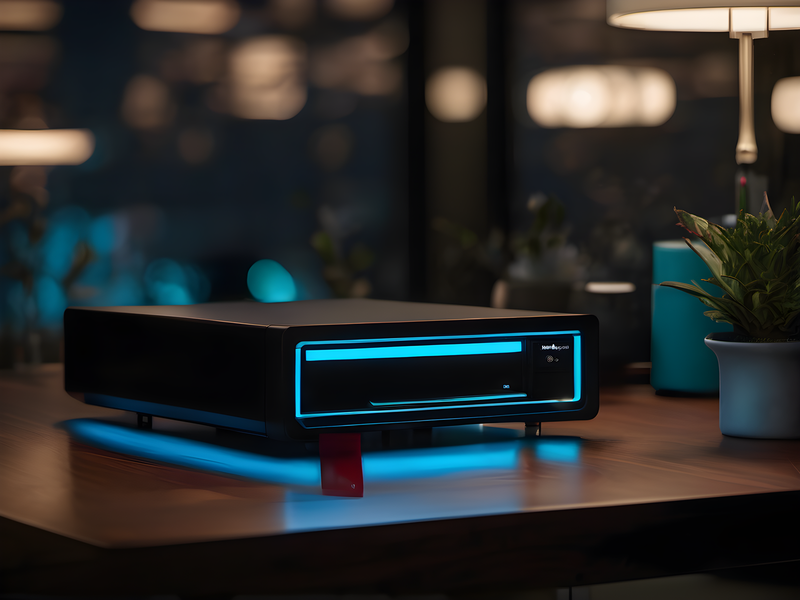
Private AI server concept: a cyan-glowing compute node set into a dark rack panel
01

Private AI Setup

We deploy open AI models on hardware in your office: right-sized machines, benchmarked models, secure install, integrations with the tools you run. Every employee gets AI that works 24/7 with no token meter and no data shipped to strangers.

How setup works


Enablement concept: cyan and amber nodes connecting around a shared central point
02

Employee Enablement

AI nobody uses is an expensive paperweight. We build role-specific assistants around each person's actual job, train non-technical staff hands-on, and leave playbooks, templates and guardrails so confident use never becomes careless use.

How enablement works
Strategy concept: concentric rings in cyan and amber marking a single decision point
03

AI Strategy & Vetting

Every vendor suddenly has an AI story and a per-seat price list. We run a readiness audit, rank a costed roadmap by payback, and vet vendors on the things that actually matter: data residency, training clauses, breach disclosure, exit terms.

How the audit works

How we work

Assess → Design → Deploy → Enable

A fixed-scope arc, not an open-ended transformation program. Most deployments have staff using private AI daily in 6–8 weeks from a signed scope.

Assess

A readiness audit: your data, systems and workflows. Which tasks pay back first, which data must never leave the LAN, and what you'd spend on rented AI over three years.

Design

Architecture you can read: hardware bill of materials, model shortlist benchmarked on your own tasks, integration map, privacy and security review. One page, fixed price.

Deploy

Hardware provisioned, models installed, integrations wired, hardening applied, backups proven. Tested under load with your team's real workloads before we shake hands.

Enable

Hands-on sessions in your office, assistants matched to each role, playbooks in plain language, and an office-hours window after go-live so questions get answered the week they happen.

The maths, in plain English

Renting AI vs. owning it

Rented AI is a meter that never stops running: every query, every seat, every price increase lands on your invoice — and your documents land on someone else's server.

The rental model

  • Every prompt, document and image is metered — usage grows, so does the bill.
  • Per-seat subscriptions multiply with every hire, including the interns.
  • Contracts, customer records and emails leave your network; "we don't train on your data" is a contractual promise, not physics.
  • Rate limits and usage caps bite exactly on the busiest Tuesday of the quarter.
  • Pricing, features and terms change on someone else's roadmap.

The CPUnity model

  • One-time build: hardware and setup. After that, running AI costs what running a printer costs.
  • No per-seat fees — add people, not invoices.
  • Models and data live on your LAN. Nothing is shipped to a third party. Ever.
  • Available 24/7 on your hardware, on your schedule, no rate limits.
  • You choose the hardware, the models, and the upgrade path. We're the installers, not the landlord.

And where a cloud API genuinely wins for a specific task, we say so. Vendor-neutral means the recommendation follows the maths, not a commission.

What SMBs gain

The everyday wins, from day one

Outcomes owners consistently get once AI runs privately on the local network — no named clients, no invented numbers, just what the setup makes possible.

The office manager drafts in seconds

Quotes, SOPs, supplier emails, onboarding packs — started from a blank page never again, drafted by an assistant that has read your templates.

Your documents answer questions — privately

Contracts, policies, invoices, manuals: ask in plain language, get answers with citations, and know nothing ever left the building.

Marketing ships more, with nothing leaked

Copy, briefs, campaign variants and SEO drafts produced by an assistant that has your brand voice and can't see the outside internet.

New hires ramp in days, not months

A patient, always-available assistant trained on how your business works — the one colleague who never leaves the company.

Questions owners actually ask

Fair questions, straight answers

Up front, more: a project fee and one-time hardware. After that, close to zero — no per-seat subscriptions, no token meter, no usage cliffs. Most clients cross the break-even line against per-token SaaS inside year one, and the gap widens from there. We run that math on your numbers during the strategy call, before you commit to anything.

Usually less than you'd think. A single GPU workstation comfortably serves a team of ten to thirty for chat, drafting, and document Q&A. Bigger teams or heavier workloads call for a small on-prem server. We benchmark on your actual tasks during the readiness audit and quote a fixed bill of materials — no over-sized racks, no grey-market imports.

The models run on your machines, inside your network. Contracts, client records, payroll, email — none of it leaves your LAN, ships to a third-party API, or trains anyone's model. Every deployment ships with security hardening: our engineers do real incident response, so they build it the way defenders do — assume an attacker, shrink the surface, keep a recovery path open.

For the work SMBs actually do — drafting, summaries, research, document Q&A, spreadsheets, support replies — today's open-weight models (Llama, Qwen, DeepSeek, Mistral and friends) are production-grade. Frontier hosted chatbots stay a click away for the rare task that needs them. We benchmark candidates on your tasks, not on vendor benchmark scores.

Readiness audit: 1–2 weeks. Design and hardware procurement: 2–3. Install, integrations and hardening: 1–3. Training runs alongside go-live. A typical deployment has staff using private AI daily in 6–8 weeks from signed scope — every phase ends with a working deliverable, never a slide deck.

That is the entire point. We build assistants around the job each person already does — the office manager, the sales coordinator, the bookkeeper — with role-specific playbooks, copy-paste prompts, and guardrails. Training is hands-on, in your office, on your own documents, followed by an office-hours window so questions get answered the week they happen.

No. We're vendor-neutral. Where a cloud tool genuinely wins, we'll say so and privacy-review the vendor you keep. Our bias is that most everyday business AI fits comfortably on local hardware — and where a cloud call is right, you'll hear the trade-offs in plain English, not a brochure.

You do — with us a phone call away. Handover includes documentation, model-update procedures, backup-and-restore drills, and a maintenance plan with health checks and quarterly reviews. The knowledge stays inside your business, not in a vendor's black box.

Private AI infrastructure at night: cyan and amber glows stretching across dark server rows

See what AI on your own hardware would do for your team.

Book a strategy call: 30 minutes on your messiest workflow, a fixed-scope proposal if it fits, and an honest "not yet" if it doesn't.